Wednesday, February 8, 2012

Act Naturally

Richard Furnstein: They are going to put who in the movies? Well, you, of course. The you in question is Richard Starkey, or, as his IMDB page indicates, "Ringo Starr." Ringo received big points for his acting turn in A Hard Day's Night (kicking cans, wearing a low slung hat, and generally appearing less stoned than the other Beatles) and turned this appearance into a healthy little side gig. He's appeared in movies that you never want to see like Candy, Caveman, and Magical Mystery Tour, usually playing the sad eyed weirdo with a thick accent. Don't quit your day job, Richard! Or, at least wait until after you release Goodnight Vienna to quit your day job.

Robert Bunter:
It’s true! Ringo, who spent his childhood dreaming of coming to America to be a cowboy, had a country and western heart. He sings this Buck Owens shuffler with genuine gusto, and of course the whole thing is a wonderful tribute to his innate aw-shucks image as the hapless goofball who stumbled onto the world stage with only one real talent: the ability to be himself. His wonderful, charming self. It’s no wonder Ringo made by far the biggest splash when the group stepped off that 1964 Pan Am jet and into the world’s collective heart. It wasn’t just the funny name or the non-threatening androgynous little boy charm that girls could have a crush on without stirring unconscious fears about the bruising realities of adult physical relations (a role that would be subsequently played by the Monkees' appalling Cockney subhuman Tinkertoy automaton Davy Jones). He was the one who was easiest to relate to. He probably looked at the other three with the same sense of awe as the rest of us, but there he is onstage with them! They’re “mates.” “Maybe there is hope for me,” is what everybody said to themselves as they watched this homely lad pound the Ludwigs and smile like a five-year-old with a new wagon.


Richard Furnstein: You are one hundred percent correct and I'm shocked that it's taken us a year and change to truly discuss what makes Ringo inherently great. Sure, he held his sticks wrong and he famously couldn't nail the beat on "Back In The U.S.S.R.," but Ringo is the glue-stuff of life. I wouldn't cross the street in socks to sniff Pete Best and he was certainly a capable drummer. The Beatles needed a lucky charm, and found this stumbling sweetheart of a man to complete their gang. When Ringo sings "they're gonna put me in the movies," he's not talking about movie executives or a Hollywood agent. He's referencing his unique journey, riding on the crest of genius towards stardom. Ringo is but a man, but chemical compounds in The Beatles would become unstable with anything but Ringo. "What would you do if I sang out of tune?" We'd love you with all of our hearts, dear buddy. Thank you for being you.


“Maybe there is hope for me,” is what everybody said to themselves as they watched this homely lad pound the Ludwigs and smile like a five-year-old with a new wagon.

Robert Bunter: Ringo must have been such a fun guy to hang out with. I love to speculate about how funny he must have been during the first-time-smoking-reefer with Dylan experience, or between takes on the set of "Help!" I can imagine him saying a bunch of hilarious stuff, and John, Paul and George becoming breathless with uncontrollable laughter, the way you laugh at a seemingly dimwitted friend who is always saying unintentionally hilarious things and you almost wonder if he even knows why he is so funny but really of course he completely knows, it's all just part of his wonderful personality that he's willing to play the fool. And then later, the party's over, everybody's gone home, you wake up and realize that he washed the dishes and played with your kid for an hour before school. How did he even get up that early? Good old uncle Ritchie, just hanging around the kitchen and whipping up a batch of his delicious beans and toast, exactly the way Julian likes it, while you're upstairs sleeping off the acid hangover and writing the bridge to "I Am The Walrus" in your unconscious mind. You ought to be ashamed of yourself and your selfish behavior, John Lennon.

Monday, January 23, 2012

I Want To Hold Your Hand

Richard Furnstein: I'm not even sure how I should analyze this song. It's a powerhouse tornado storm locomotive sent from heavenly angels to demolish the stale mediocrity of pre-Beatles rock and roll. It's not the greatest song that The Beatles wrote but it may be the greatest song ever written. No, that doesn't make sense. It doesn't matter. Put on the mono version (clearly) and spazz out. Good luck to your floorboards. Hide your valuables, because I may start stealing things.

Robert Bunter: Yeah, that's some assault, pal! I think there's a real violence implied here: the insistent throb of the bass frequencies, the pounding drums, the handclaps like slaps in the face. These surging mopheads represented a threat to the conformist social order, not to mention YOU, the listener. If you're a boy person, you'd better watch out or get with the program because these fresh-fangled supermen are about to take all the girls. If you're a girl person, the raw sexual energy is so powerful that all you can do is rock back and forth in your seat and scream at the top of your lungs. Look at the old footage. Do those girls look happy to you? They have tears streaming down their faces and their eyes are wide with terror. They pull their hair and screech and probably they wet their pants. I don't envy the poor custodian who was in charge of seat wipe-downs in the upper decks of Shea Stadium in 1965, that's for sure. They were screaming in ecstasy, but it was ecstasy of a very edgy sort. They were driven straight out of their heads. Meanwhile, mom and dad are scared, but for different reasons. The last time Father saw anything like this was on the beachhead at Normandy. Mother sees something in Daughter's eyes that is chillingly familiar; remember, she was the one who had to do all the laundry. And young Robert was looking straight at the Sunday night Ed Sullivan TV set with glazed eyes, possibly the most terrified of all. Nothing will ever be the same now; these four lads are miles ahead of him in a race that he didn't even realize was being run. Lots of catching up to do, son. You might want to cancel baseball practice.

Richard Furnstein:
All this from a song about HOLDING HANDS. It's an innocent act, like millions of color tinted photographs of little kids wearing oversized adult-styled clothes while holding hands. Aw, how cute. It's not cute, this is how trouble starts. A gentle touch of hands after you move closer to her after coming back to the couch after a "get psyched" trip to the bathroom. An exploratory fondle underneath the booth at a bar. This is how babies are made and diseases are spread and hearts are broken. The Rolling Stones would take it much further in mere months, but they were probably satanists and ate venereal diseases for breakfast. The Beatles were just well meaning boys who were a touch overdue at the barber's. Or were they? Man this song does it all!

I don't envy the poor custodian who was in charge of seat wipe-downs in the upper decks of Shea Stadium in 1965, that's for sure.

Robert Bunter: When things soften up during the middle eight ("And when I touch you I feel happy / inside"), it doesn't really soften up at all. It's an obscene mockery of a tender moment, like a guy whispering "Here, kitty kitty" to a frightened cat in a dark alley that he's about to bludgeon to death with a cat hammer. The confident singer has been screaming in your face about his wants and needs; then all of a sudden the bottom drops out and he's sweetly cooing for just a few seconds, until he can't contain himself any more and starts screaming "I CAN'T HIDE! I CAN'T HIDE!" in a moment of such primal intensity that it wouldn't be out of place on a Stooges or MC5 record. The vocal harmony is in fifths, with no major third to smooth out the sharpness. I'll say it again: this record takes us to unsettling places usually obscured from sight during sane, daylight hours. The Beatles? Innocent young boys looking for a snog on the naugahyde love seat? Richard, these are four violent monsters. John was like one of those Aztec chieftans you see in the crude paintings at Mexican restaurants, with an ornate Eagle beak mask attached to his head, leading a young virgin up the steps of a hideous temple to have her heart cut out to appease Xpoctxzl, the Mushroom God. Paul is a mother snake, eating her own writhing young, still clicking and shiny with the glistening secretions of snake birth. George is one of Alex's droogs from "Clockwork Orange," ripping the doors off suburban homes and violating their screeching inhabitants. And Ringo? He was like a cross between Pennywise the Clown, Alfred E. Newman performing impossible violations of physical laws on the cover of Mad Magazine and one of the unspeakable malevolent forces in H. P. Lovecraft stories.

Richard Furnstein: Okay, point taken. "I Want To Hold Your Hand" is like a prequel to one of The Beatles' greatest accomplishments: "She's Leaving Home." John and Paul had the nerve to rip apart our social structure with their incredible music and bold new approaches to hygiene and causal sex. The world had to change with them; it took real balls to write a tragic song about the changes that they forced on the globe. The past was boring and typically in black and white. Then, after the dust settled, the full prism of deviance, addiction, and rot was exposed. That old drunk in the park was no longer a touch of local color, he was now a shifty eyed speed freak who rubbed his sagging torso against the jungle gym. Your cousin decided that her dream to become a stenographer was boring and now lives with an old biker in a rat infested city. You don't even want to know how she makes money now. The Beatles surveyed the land and realized that they created this technicolor fallout: broken homes and an insurmountable generation gap. Then they wrote "She's Leaving Home" as an olive branch to the world. "Sorry I wanted to hold your comely daughter's hand, I didn't realize that it would destroy your narrow dreams."

Robert Bunter: That's exactly what happened. Did you ever notice that this song doesn't even seem to have distinct instruments? Sure, there's guitars and basses and drums and voices, but they all seem to blend together into one big rumble. The effect was heightened when the song came out in 1964, before the era of high fidelity audio reproduction systems. Back then, the only places to hear this song were on portable record players, AM radio, or the laughable speaker cone on your parents' TV when the Ed Sullivan show was on.


Richard Furnstein:
"Ladies and gentlemen, The Four Sexual Aliens Who Will Reconfigure Our Minds And Create Uncomfortable Distance Between You And Your Children!" (APPLAUSE.)

Friday, January 20, 2012

When I'm 64

Robert Bunter: Oh, Paul. What are we going to do with you? Possessed of one of the most electrifying male voices in heavy rock history, James Paul McCartney also happened to be one of the most versatile and gifted songwriters of his era – equally capable of breathtaking anthems, bold experimentalism, heartrending ballads, and delicate acoustic meditations. And it mattered not to what he turned his hand: it was almost always anchored by an almost supernaturally catchy melody and performed with admirable virtuosity on a wide variety of instruments. He is the man who can do anything. So what does he do? He dons one of those round Styrofoam hats, grabs his dancing cane and plops out a seemingly endless series of rooty-toot soft shoe ditties “for the grannies to dig” as George so accurately put it. It’s like Albert Einstein took a break from his equations to write jokes on Bazooka Joe wrappers, or Michelangelo painting the side of a goddamn barn.

Richard Furnstein:
Sure, Paul had a great howler on him. He could have built his entire career on his howl and a rebellious rock persona with a tight expiration date. Paul was more than a get rich quick scheme and a leather daddy hat. Sometimes wanted to sing about old people tending to their little potato patches, grandchildren that scoff at your Eddie Cochran imports, and finding your dear love attractive even though she's now an old lady and smells weird. "Hope I die before I get old," eh, Pete Townsend? No way, Paul's seen the impact of early death on his life (his dear mama and good friend Stu and maybe some other people) and he's celebrating the crazy journey of life. "You and I have memories longer than the road that stretches out ahead," he would later observe. Sounds nice. Put some tea on the kettle. You grandkids can use that dorm room hot pot that you plug in, but I'm doing this the old fashioned way. Take the long way 'round.

Robert Bunter: Well, it pains me to admit this, Richard, but you’re right. Paul’s right. You’ve actually taken this whole analysis to the next level. Everyone assumed John had the greater emotional maturity because he was willing to forcefully confront his bleakest demons. Likewise, we assumed Paul’s eager-to-please Everyperson charm was a mask behind which he hid his real feelings. The truth is, he was aware the whole time that the real cosmic truth of life lies in the simple, everyday world around us. Old people shuffling around in sleepgowns while they brew their tepid brown mugs of Earl Grey were once vital, young people, full of angst and complex thoughts. THEY NEED BEATLES MUSIC, TOO. Paul’s ultimate wisdom recognizes the endless circle of life and the inevitability of aging and loss in a way that John’s primal babyscream tantrums were unable to approach. As someone once said, “It’s like a dusting of opium on Auntie Minn’s biscuits.” Behind the Paul-mask, a showbiz entertainer. Yes. But, behind the entertainer mask: PAUL.

Richard Furnstein: A snake eating its own tale. Adding to the cycle of life cacophony is the fact that this is one of Paul's first songs. It's the sound of pure melody pouring out of a confused adolescent on the sitting room's upright piano. "Your Aunt Mim has stopped by for wafers and tea, Pauly. Play us that song about old people." And he did, because he gives the people what they want. I'll tell you what I want, though. Great recorded pop music with killer bass tones (CHECK) with a light touch of sentiment (OH YEAH). It's not just light story time, however. Paul offers the amazing lyrics: "Every summer we can rent a cottage in the Isle of Wight if it's not too dear" and "Yours sincerely/wasting away." "When I'm 64" is the perfect balance to an album about the heavy progression of youth culture. Take all the drugs you want and give your love away now, kids. But keep in mind a lifetime of new drugs (grandchildren, post menopausal intercourse, nice old sweaters) awaits you. It's closer than you think...

Paul was more than a get rich quick scheme and a leather daddy hat.

Robert Bunter: Wow. We’re really getting down to it! The harsh yet comforting realities of life. Now for some random observations: if you listen really closely in headphones, you can hear some amazing, subtle reverb on Paul’s lead vocal, which seems totally dry at first listen. While we’re on the subject, Paul’s voice has been sped up to sound more youthful, and he adopts a ridiculous Scottish accent on the word “your” in the lyric “Grandchildren on your knee.” I’ll bet whoever was in charge of ringing the bell at the end of that bridge had a hard time not laughing. The Lennon/Harrison backup vocals add a distinctive flavor, like pepper (!). The harmonized clarinet line under the last verse (and under the phrase “go for a ride”) is really compelling when you focus on it. Lastly, Paul’s closing “Hooo!” as he trots offstage is totally corny.

Richard Furnstein: So we agree, this is one of the clear highlights of "Sgt. Pepper," right?

Robert Bunter:
You’ve got to be kidding me! It’s is without a doubt the worst song on that album. I’m going to go even further: it’s terrible.

Richard Furnstein: I hope you enjoy the rest of your life. I hope you bounce grandchildren on your knee or whatever it is your people do. Best of luck to you. We can't grow old together as friends now.

Robert Bunter:
Hoooo!

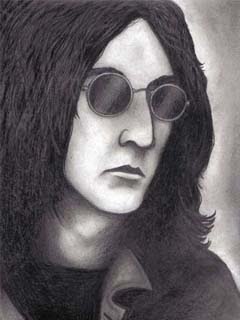
Original Beatles fan art by Jeff Love (http://jeffreyalanlove.blogspot.com/)

Friday, December 30, 2011

If I Fell

Richard Furnstein: Good old soppy John Lennon has written a love song, or as close as a love song as he could get at this fragile early stage. He's offering up his heart to a young lady but can't stop bringing up his heartache from a recent relationship. The song quickly goes from the tender sentiment of the first verse to complete emotional insecurity and mind games. John's desire to love is trumped only by his desire to get back at his ex-girlfriend. "So I hope that you see that I would love to love you and that she will cry when she learns we are two" is such an incredibly twisted line. This is young love with an eye towards the rear view mirror. Hold me closer, tiny dancer. That girl that broke my heart is watching us...

Robert Bunter: You’re right about the lyrics – John’s still dealing from a deck stacked with anger, jealousy, spite, uncertainty and betrayal, thanks to his childhood traumas. But for me, the most noteworthy elements here are the musical construction and vocal performance. The melody and chord progression are just utterly lovely, the opening bars are an early example of the Beatles’ career-long habit of starting songs with an arresting intro, and the graceful Lennon/McCartney vocal duet is a small miracle of intuition. This melody would be completely beautiful as a solo Lennon vocal. It would also sound great with George chiming in on some gooey three-part chord stacking a la “This Boy.” A straight duet would have been nice, as well. Yet with their typically unerring instinct for perfection, they decided to use a combination of nicely harmonized lines and unison passages. Mark Hertzgaard described this as sounding like “two meadow hawks, gently gliding around each other” or something like that (I have the book in the car but I don’t feel like going down to get it), and I’ve never been able to listen to this song without remembering that beautiful image. He also described the piccolo trumpet on Penny Lane as sounding like a hummingbird who pauses briefly before a flower before hovering away in delightful patterns. What is this, “Wide World of Animals?” Nice imagery, Hertzgaard, and great song, Beatles.

John’s still dealing from a deck stacked with anger, jealousy, spite, uncertainty and betrayal, thanks to his childhood traumas.

Richard Furnstein: Without a doubt, you are right. Hertzgaard is right. The birds are right. You don't think hawks understand love? Spend some time at a bird sanctuary, son. You'll see beauty, joy, trust issues, in-flight doing it, and other emotional improbabilities. It's all here and dressed up in the loveliest arrangement and recording that The Beatles had yet attempted (yep, that includes "This Boy" and "And I Love Her"). Lennon gives it one of his single best melodies and this one goes in the all time Lennon file along with "Instant Karma" and "Strawberry Fields Forever." Absolute perfection.

Robert Bunter: What else is there to say? I remember the first time I heard this track, as a young man listening to a radio on a Saturday evening near a fireplace in Drexel Hill. Even at the age of seven, I recognized the presence of sophisticated adult emotions that I had no business knowing about yet. I was given to know the bewitching enchantment and paralyzing uncertainty of love. I remember jotting down some notes in my primitive child’s handwriting on the inner pages of my well-worn Trapper Keeper. I still have the paper … it says: “Bewitching enchantment … paralyzing uncertainty … consult Hertzgaard for bird similies,” and then underneath that there’s a drawing of a man sitting on a whoopee cushion and it says “BLAAAAAAT!” coming out of the seat. Those wonderful childhood days have passed, but this immortal song will never go away. Listen to it now, friends, and celebrate the beauty. Happy new year, Rich. 

Richard Furnstein: And a ding dong ding dong to you, too. 

Wednesday, December 28, 2011

Something

Robert Bunter: Try to hold back the tears as you wave the last goodbye from the driveway, Mum and Pappy Beatles. Your little boy George is all grown up. Remember the gawky little goon with the big teeth and intelligent eyes? Well, he’s got a beard and a wife and a narcotics conviction now. He’s written an immortal classic on his way out the door, just like his bigger, better brothers have been doing for so long. It’s not a blatant Lennon-McCartney knockoff (“You Like Me Too Much”), a curry-flavored novelty track (“Love You To”), an interminable, half-baked acid hangover (“Blue Jay Way,” “It’s All Too Much”), or the inestimable “Old Brown Shoe.” “Something” is the work of a mature craftsman and consummate professional, at the top of his game. Here’s the mental image for this one: mighty George stands seven feet tall and surprisingly fit, with his flowing beard and long hair, at the top of a mountain with the wind blowing and the clouds moving past too quickly in speeded up stop-time animation. His eyes have seen eternities; he stands on the verge of freedom. A pack of prime stallions rumbles by gracefully in the valley below (represented by Paul’s bassline and Ringo’s tom-toms); George, unperturbed, looks down and nods with solemn approval. You didn’t even realize he was carrying a guitar, but suddenly he is playing it and it’s the most beautiful solo you ever heard. Everybody starts to cry but George just stares into the infinite, spiraling center-point of limitless potential.

Richard Furnstein: Real chills, there. "Something" is one of George's rare graceful songwriting efforts. The bridge was always a trouble spot for young George--earlier efforts were marked by awkward transitions and percussive cover-ups or, in the case of the psychedelic years, he would forgo the bridge (and often a second chord) completely. Here, it's the most beautiful moment of "Something," transcending the effortless elegance of George's descending chord structure in the verses. He proved to John and Paul that he could stand up straight and tall with them. He passed the test and was ready to enter the world a man. I know you already said that, Robert. But it's true. And I'm crying.

Everybody starts to cry but George just stares into the infinite, spiraling center-point of limitless potential.

Robert Bunter: Don’t cry, Richard. This isn’t just another former-goon-finally-writes-great-song story, like those of Bill Wyman (“Je Suis Un Rock Star”), John Entwhistle (“My Wife”) or Roger Waters (“Several Species Of Small Furry Animals Gathered Together In A Cave And Grooving With A Pict” … no, just kidding. It was “Take Up Thy Stethoscope And Walk.” No, LOL. “Time.”) See, you're smiling again! Tears are for children, Richard.

George didn’t write this primal, crucial ballad because he wanted to live up to the standard set by John and Paul. He wrote it because of the same reason why any man ever does anything: he was in love with Patti Harrison, nee Boyd. The unstoppable adolescent hormonal force that inspired the early moptop puppy love throbbers has given way to a very mature, adult sophistication. George’s lyric emphasizes the ineffable, complex nature of his feelings; “somewhere,” “something,” “somehow” – he’s not sure where or what it is, despite the assurance that “I believe (and how!)” The most intense moment in the track (not counting the immortal guitar solo, of course) emphasizes this uncertainty: it’s the “I DON’T KNOW” on the bridge, when George’s soft, mellow vocal tone is raised to a roar. There was a time when he was happy just to dance with you; now he’s caught up in a dense yet ephemeral fog of conflicted emotions. The music seems to float like dawn mist above a warm salt marsh; Paul’s bass provides a gentle, tugging undertow, Ringo’s elementary beat is the very essence of simplicity, George Martin’s effective string arrangement sweetens the mood without becoming cloying.

Richard Furnstein: Let's talk about that solo and the string arrangement for a minute. Word is that George delivered the solo live in front of the orchestra. It's one of the most beautiful and perfect mental images ever. George absolutely delivers his greatest solo, just pure love beams shooting into the sparkling eyes of Mrs. Boyd. I'd kill for some video of George recording the solo with the orchestra. I can't believe everyone kept it together to keep bowing and plucking and whatever it is that string players do. I'd give anything to be there in that moment, just like I would have loved to have been a fly on the wall when Freddie Mercury delivered the "Okay!" in "Under Pressure" or when Chess Records brass first heard Howlin' Wolf sing the line "When the fish scent fills the air, they'll be snuff juice everywhere" in "Wang Dang Doodle."

Robert Bunter: Yeah, there are a lot of great musical moments in history to be celebrated. If someone invents a time machine, you’ll be the first person I consult when I enter the destination coordinates. But there’s another thing we have to discuss: the infamous extended outro of “take 37.” On this rare outtake, after the familiar “Something” ends, we hear the Beatles continue playing. A strange, downbeat piano figure is repeated (played by John), while the others join in the dirge, slowly building in intensity. Eagle-eared listeners will note that the riff they fall into would be partially appropriated by Lennon on the tune “Remember” from the crucial “primal” album. In his “The Unreleased Beatles” writeup, excellent author Richie Unteberger speculates that this might be the sound of the Beatles playing a funeral requiem for their own doomed career. I love how he prefaces this flight of fancy with “I may be reading too much into it, but …” You’re not reading too much into it, Mr. Unteberger. The Beatles are no longer four human men, they are an archetypal force of the universal mythos. Their story belongs to us, and there is no such thing as “reading too much into it” or “preposterous speculations about the meaning of each detail of the songs” or “making up a bunch of ridiculous mental imagery of your fantasies about what the recording sessions were like.” In fact, Mr. Unteberger, if you’d like to contribute to this blog, we’d be honored to hear your thoughts on the “Mother Should Know” mono mix and the imaginary heavy machinery that Lennon was operating on “Ticket To Ride.”

Richard Furstein: Good save. I was hoping we'd get around to the "Remember" tag. There is too much to consider in this song. We've already touched on the songwriting maturation, divine love inspiration, and majestic solo angles. We could probably write a book on the James Taylor connection (Taylor already delivered "Something In The Way" to Apple Records), the incredible possibilities of Paul's melodic bass playing, and the beauteous union of all four Beatles (and Billy Preston) on their swan song album. And, gosh, we haven't even discussed how Frank Sinatra called "Something" "the greatest love song ever written" (he may be right!) but then attributed the song to Lennon/McCartney. That guy was always getting things wrong though. He also beat up women and was chummy with the mob. Hey, come to think of it, I'm surprised he wasn't better buds with John Lennon!

Robert Bunter: You know, that Sinatra thing was a big deal to Paul McCartney. I just saw this YouTube the other day of an interview where he explains how all the Beatles were equal forces, and that’s his evidence for George’s status. “You know, we wrote most of the songs, but George wrote ‘Something’ and that’s the one that Sinatra sang, you know?” or something like that. You can look it up, I think it’s called “Paul discusses John’s death” or something and Paul’s wearing a sweater in it.

Richard Furnstein: Oh, that's helpful, the video of Paul where he retells a Beatles story for the thousandth time while wearing a sweater? I'm sure that'll be easy to find. Any other videos you want to suggest? Maybe a good one of Ringo saying "peace and love" poolside in Los Angeles? 

Thursday, December 22, 2011

Christmas Time (Is Here Again)

Richard Furnstein: The secret is O-U-T spells out: this is a top tier Christmas song of all time, up there with "Wonderful Christmastime," "Merry Christmas, Darling," and "Christmas Don't Be Late." Would you expect any less from The Beatles? They practically invented the modern Christmas with their regular winter album releases and continued new product for the holiday season. I sure hope the George Harrison Living In The Material World book is sitting under my tree this year! But yeah, this song includes the best elements of that magical period after Sgt Pepper's and before The White Album. Ringo's drums sound huge, the band seems to be having fun (even George!), the lyrics are a fun mess. I'm feeling the spirit, heavenly angels.

Robert Bunter: Me, too! The Beatles observed Christmas just about every year of their career, with the charming fan club flexidiscs as well as their wonderful Christmas albums, like "A Collection Of Beatle Oldies" and "1962-1966." I wouldn't expect any less from them - after all, Christmas represents an utterly primal, crucial aspect of human existence. Long before Christ, we have annually celebrated rebirth and renewal during the bleakest, coldest part of the year. Naturally, The Beatles, which represent the finest aspects of the spirit of the Universe, aren't going to play it cool like other famous beat groups and let the celebration pass unremarked. Lift up your hearts and give thanks and praise. Yeah yeah yeah!

Richard Furnstein: The Christmas singles are an interesting listen this time of year. John's usually impersonating mentally handicapped Scottish people. Paul genuinely hopes you have a wondrous day and all your wishes for the new year come true. Ringo is usually confused by something in the recording studio, but manages to say something witty. George surprisingly played the droll card. "Christmas Time (Is Here Again)" is the only real song on these discs, but what did you expect? They were busy writing like 35 great songs a year. They didn't have time to actually try to write carols in their downtime. There were drugs to take and islands to buy. Let's all give thanks for these supermen

Robert Bunter: There would be plenty of time for that when they got to the solo years. Let's consider that output. Lennon managed the best hook, I think, on "Happy Xmas (War Is Over)." It's kind of wonderful that he would even make an attempt. Paul's "Wonderful Christmastime" is catchy but it reminds me of stores. Stores like Bamberger's and the long-gone House of Bargains in Springfield. That is not a good association. C-minus. George whipped out his "Ding Dong Ding Dong" in 1974. It's pretty weak, frankly. The Roy Wood-esque arrangement is welcome, but he was capable of much more. Ringo was "wrong-o" when he allowed "I Wanna Be Santa Claus" to reach the marketplace. It's awfully repetitive and nobody's ever going to like it. 

I'm feeling the spirit, heavenly angels.

Richard Furnstein: I think you are wrong. I love those songs, except for Ringo's song because it is garbage. I can probably do without hearing "Happy Xmas" ever again. Melissa Ethridge and her Ovation 12-string may have ruined that song forever. "Wonderful Christmastime" and "Ding Dong" are personal favorites. Sometimes I want to be reminded of going to Amesway with my mother, man. And George had the nerve to write a New Year's song.


Robert Bunter: I'd like to say "Happy Christmas" to all the people, everywhere. I hope you find a copy of the 2009 remastered mono box under your tree, and that it's not counterfeit like THIS GUY'S was.

Richard Furnstein: Happy Christmas, everybody and I hope you're having a lovely time and all the best for the New Year, peace and prosperity and all that. And much love (kissing noises).

Friday, December 16, 2011

Long Tall Sally

Richard Furnstein: One of Paul McCartney's finest throat bleeders, "Long Tall Sally" was the boys' latest search and destroy album closer. Yet it doesn't even close an album, it opens an EP. The boys were wise to showcase all originals on the A Hard Day's Night album, it made the toss off rocker collection Long Tall Sally extended player a thing of pure rock beauty. Like egging the dean's house, prank calling the frigid beauty's house, and making lewd gestures in the malt shop. This is the sound of newly hemmed school pants cracking under the teenage pressure. Paul is out of his mind on this. Heck, they are all out of their minds on this. Listen to that solo, Mr. Voltero. There won't be an economics mid term today, we're too busy fornicating in our minds.

Robert Bunter: I didn’t realize until I read Tim White’s excellent “Tell Me Why” that “Long Tall Sally” and “Tutti Frutti” are filled with secret slang signifiers from the gay 1950s underground. That’s amazing! Little Richard is really overdue for a reevaluation. Sure, he’s probably in the Rock and Roll Hall of Fame and he’s always name-dropped when you list the original pioneers, but I’d submit he deserves to be ranked on the same level with revolutionary, transformational figures like Bowie, Dylan and Bolan. The staid, conservative parents of the ‘50s were frightened enough by the spectacle of their crew-cut, bobby-socked offspring writhing and jumping while a black man screamed and kicked over the piano stool, but they would have keeled over on the spot if they knew what he was really on about. It’s like Frankie Goes To Hollywood frontman Holly Johnson said when asked about the controversy surrounding the “Relax” video: “The kids didn’t know anything about all that, they just think it’s a party.” I doubt The Beatles were 100% hip to the full implications, either, but I submit that they wouldn’t have cared, if they were. Paul turns in the first immortal vocal performance of his career, while the “boys” bash and crash gleefully in the background. Exciting!  

Paul's here to deliver the Cliff's Notes to Lil Rick. Leave your wig and high heeled boots at home, sir. Prince ripped you off, you say? Fascinating. If you don't mind, I'm going to get back to listening to London Town.

Richard Furnstein: My favorite thing about Little Richard is Paul McCartney. He made it so we never had to listen to Richard's primal (yet admittedly crucial) rock ploppers about illicit skiffle shack rendezvous in the heart of a dank bayou. No sir, Paul's here to deliver the Cliff's Notes to Lil Rick. Leave your wig and high heeled boots at home, sir. Prince ripped you off, you say? Fascinating. If you don't mind, I'm going to get back to listening to London Town. Little Richard is just a weirdo that would appear on kids shows with frightening makeup, yelling and sweating at an inappropriate volume. Gimme Sir McCartney anyday.

Robert Bunter: You know, I want to respond indignantly and insist that you show some respect for one of rock’s founding fathers, but, let’s be honest. I never listen to Little Richard. I don’t really want to. When I’m in the mood for that sort of thing, I’ll put on Esquerita. I don’t even know if Little Richard still walks among the living. Please check that out and let me know. Also: London Town is great! A truly underrated album with some lovely moods and emotions. The shimmering, effervescent beauty of “I’m Carrying,” the murky rock of “I’ve Had Enough,” the bleary European portraiture of “Café On The Left Bank” and “London Town” – I would definitely rather listen to this than some old Little Richard sides. Anyway, “Long Tall Sally” is a great track. I don’t have very much more to say. Let’s talk more about London Town.
Richard Furnstein: London Town is often discussed as suffering in the wake of punk rock music. Well, I'm sorry, Legs McNeil. While you were off pogo-ing and gobbing your wobbly toothed disease at some trust fund lunkheads, Paul was off exploring textures and harmonies with his great love and great friend. I hate to tell you, but Paul already gave you his punk in numbers like "Long Tall Sally." Now it was time to enjoy the Scottish countryside and have children. We all have to grow up eventually. Never one to settle, Paul would later tip his golden cap to the new wave with "Spin It On" from Back To The Egg. But you never listened, did you, Legs?

 Robert Bunter: You, Richard Furnstein, have again nailed it. It’s that magic! 


Thursday, December 8, 2011

Golden Slumbers

Richard Furnstein: Paul is a tugboat captain on a sea of oozing strings. A friendly anamorphic frog from a forgotten Disney moving steering us through the heavy shadows of a painted jungle. It's sleepy time on Abbey Road. Paul ushers out the creepers and shaking perverts from John's section. Yet, while Paul promises a lullaby, he never quite delivers. Paul offers his promise to the sleepy children, but then we either get Ringo bang crashing his well loved calf skins or the surging "Carry That Weight." It's then we realize that Paul already sang us the lullaby and the band is about to break up. Melodies come rushing back. The future is beautiful.

Robert Bunter: Sure, everything is beautiful when you’re asleep. Lack of awareness is the only respite from the harsh realities (John Lennon) that surround us. Go to sleep, Paul (he’s singing to himself). Being awake is too painful. “Once there was a way to get back homeward.” Well, James, that’s in the past. Nobody’s going home to the dank stage of the Cavern where you discovered what it means to be truly alive… nor to the screaming crowds and black-and-white overcoat years of Beatlemania … nor to the sunny psychedelic vistas of the “Paperback Writer” video shoot … nor to the joyful “Hey Bulldog” overdub sessions … There’s no way home anymore. For the man who believed most faithfully in the beautiful dream the Beatles represented, the cold, brittle sunshine of 1969’s reality was intolerable. Paul was the only one who never lost faith or quit. When the others bickered and frayed and spaced out, he was always trying to corral the boys into another wonderful project or set up another ramshackle tour on a magic, colorful bus. Now, with the dream falling apart, he attempts a desperate lullaby in the vain hopes of recapturing the departed glory of the past. Paul’s contributions to the long medley of Abbey Road’s second side are a heartbreaking, elegiac swan song for the group’s entire career, and it’s all just so beautiful and sad it make me have to cry.

Lack of awareness is the only respite from the harsh realities (John Lennon) that surround us. Go to sleep, Paul (he’s singing to himself). Being awake is too painful.

Richard Furnstein: There are a lot of tears to go around, especially on a day like today. But listen, I think Paul was looking forward to the trip home. "Golden Slumbers" is a companion piece to "Two of Us." Where "Two of Us" was a nostalgic trip back to the youthful promise of skiffle and finger pies, "Golden Slumbers" is a resigned whisper from a man facing his thirties. It's time to hang up the nappies and tuck in the rugrats. See ya in the papers, John. Stop by when the All Starr Band is making the rounds, Ringo. Good one, George. We're men now.

Robert Bunter: Looking forward to the trip home? Don’t you see, Rich? THERE IS NO WAY HOME. Once there was a way, but no more. I’d like you to cue up this track on your copy of the new 2009 stereo re-master of Abbey Road and listen to dear Paul’s voice on the words “smiles awake” at :43. That, my friend, is not the usual wonderful Paul McCartney intensity voice (“Long Tall Sally,” “Hey Jude” or “Oh, Darling!”) I would submit that that is an utterly primal, crucial expression of deep pain; possibly the most genuine vocal moment that Mr. hide-your-inner-pain-behind-a-wall-of-showbiz-schmaltz-and-good-guy-charm McCartney ever committed to wax. Your vision of a resigned acknowledgement of the solo future is bewitching, and maybe that’s even part of what’s going on here. But I think that vocal moment belies such pat explanations. Oh, wait, what’s that? You don’t own a copy of the 2009 Abbey Road stereo re-master? I’m sorry, I didn’t realize I was dealing with somebody who doesn’t care about having all the Beatles’ albums. You’ll just have to forgive me.

Richard Furnstein: I'm completely and utterly leveled. 

Robert Bunter: I’m sorry man. I didn’t mean that. I’m just really emotional today.
  

Wednesday, November 23, 2011

Not A Second Time

Robert Bunter: The black-and-white Beatles. Four young men re-writing the rules and laughing every step of the way. Dark overcoats, gloomy London fog and minor-key tonalities somehow seemed bright and joyous when the moptops did it. “Not A Second Time,” like all of the other songs on With The Beatles, finds our heroes on the glorious cusp of much greater things – so much so that it’s difficult not to see these early triumphs as little more than appetizers for impending glorious entrees (like the bathtub scene in Hard Day’s Night, “I Don’t Want To Spoil The Party,” the Sgt. Pepper's insert badges, Rubber Soul, the picture on the back of the Revolver sleeve,  the Penny Lane promo film, the Maureen Cleave interviews, “Hey Bulldog,” the White Album, the Apple boutique, Paul-Is-Dead rumors and, lord help us, “Old Brown Shoe”). But the wonderful “Not A Second Time” deserves to be appreciated on its own terms.

Richard Furnstein: I'll tell you what, I would run a "Great Lost Beatles Songs!" feature if I was a British music magazine editor. And you know what would be at the top of the list? Well, probably "Woman," a McCartney composition for Peter and Gordon (under the pseudonym Bernard Webb). Number two would definitely be "Not A Second Time." It takes a little digging to get to this one. It's buried deep in the With The Beatles tracklist and initially appears like a minor composition next to George's hair shaking reading of "Devil In Her Heart" and John ripping the house apart with "Money." "Not A Second Time" is John in a familiar early setting: perfect girl group melodies devoted to how women are the source of all of his pain. It's a reliable formula, and I think "Not A Second Time" is the best of the John songs about weeping. "My cry is through/Oh whoa oh!" might be my favorite couplet in all of Lennonland.

I’ll tell you what: I’d be bobbing my head up and down really hard and asking George for a cigarette. I don’t even smoke!


Robert Bunter: Yeah, all the usual ingredients are here – the lurching beat, piano embellishments, clever chord movement, tearful lyrics, double-tracked Lennon-moans. The thing is, those “usual ingredients” are “delicious” and I would love to “eat” them at every single “meal.” You can really hear the studio ambience on this recording, which makes it easy to picture yourself there with them, in the room. I’ll tell you what: I’d be bobbing my head up and down really hard and asking George for a cigarette. I don’t even smoke! Here’s something that’s great about this song: the fade-out. John has already served us a fully satisfying dish, and we’re ready to call for the check and gather our cloak from the lobby hangers. But what’s this? Dessert! An extra little section that evokes the rest of the song without repeating it. Thank you so much, Mr. Lennon. I plan to tip handsomely.

Richard Furnstein: It's all in the spirit of the season, my old friend. Lennon is breaking bread with us. He was a fool. Hell, he is the first to admit it! But let's realize that he's learned his lesson. Oh wait, now he's crying again in the outro. Listen, John. We're here if you need us. Forget about your girl troubles and pass the gravy.

Robert Bunter: Sorry guys. I've already eaten all the gravy.


Tuesday, November 22, 2011

Revolution

Richard Furnstein: A guitar that rudely walks through a sliding glass window at a fancy cocktail party. A fuzz tone that says "roll over, everyone." Eat hell, Chuck Berry. See ya around, Brothers Davies. Did you say something, Jesus and Mary Chain? John's here and he wrote a confusing song about politics, but oh you wouldn't believe the guitars and the lunkhead drums and Paul screaming like a hot plate of banshee meat. "Minds that hate"? Hey man, that sounds like a bum trip to me. Shake off the spooky feelings, Ringo's drums. Oh, did I mention George's lead? It's somehow even fuzzier! I can't even handle this. I'm trying to analyze this business and I'm just knocked upside the head with this song. Rock wouldn't feel this way again until "Cold Turkey" and then that was it, man. This neuters The Clash. Are you into hardcore music? Well, that music stinks and sounds like dirt.

Robert Bunter: And it's all the more amazing that this recording was done as a middle finger to the other Beatles, who'd rejected the slow, acoustic Revolution (1) as too slow for a new single. "Oh, it's too slow, is it?" So Johnny Moondog just increases the tempo and cranks up the knobs until every meter is in the red. "Take that, pigs. You can't tell me that's not a single now, can you?" But unfortunately, they could. It's just a B-side, because Paul had written "Hey Jude," one of the highest achievements of mankind, a song inspired by John's horrible abandonment of his first wife and son. Foiled again, John. It's a shame that you're a right bastard, mate. Your stirring political anthem will make a nice Nike commercial someday. This single is the main reason that The Beatles broke up. 

Are you into hardcore music? Well, that music stinks and sounds like dirt.


Richard Furnstein: It was getting ugly, that's for sure. John was a few years away from the primal scream, but this song serves as an escape from the rage and frustration that had been developing for years. Even John's appearance at the time suggested a fierceness. His angular Liverpudlian features had sharpened even more; he now looked like his face could open a can of Heniz Beans (soft stomached Ringo's favorite). The Beatles faced a peculiar artistic dilemma after the peaks of Revolver and Sgt. Pepper's (not to mention the personal and business issues brewing since the death of Brian Epstein), and The White Album was a band trying to simultaneously strip down while pushing forward. That's certainly a weird road to travel, but they found a way to charge and change in "Revolution." They would certainly go back to the Chuck Berry well again (that was Lennon's default rock mode), but "Revolution" was ultimately their most successful attempt at hairy rock.

Robert Bunter: John makes a good political point along with the sonic assault. If you want to topple the system, what is your plan to replace it? Rebel John liked shaking the foundations of society as much as anybody, but he had enough wisdom to realize that the denim-clad rabble marchers carrying megaphones and peace signs were, all too often, a bunch of callow ego-trippers. Lennon could be a dope, but I'm giving him big points for this one. You want to change the world? Mow the damn yard. Clean up the dishes. Tend the to the washing. That's how you do it. Nice electric piano by studio ace Nicky Hopkins on this track.

Richard Furnstein: I made a promise to myself long ago that I would consider a write up on "Revolution" to be perfect once the stellar piano work of Nicky Hopkins was acknowledged. That day has come. Alright!

Monday, November 21, 2011

I Will

Robert Bunter: An interesting case. In the midst of The White Album's dark moods and unsettling undercurrents, McCartney offers a slight, seemingly inconsequential love song. You're thinking to yourself: well, of course he did. That's his modus operandi. But I think there's more than meets the eye here. By shoehorning this lightweight "Beatles VI" outtake (it's not really, I'm trying to make a point about its anachronistic sound while offering the usual scornful derision for the Capital/American butcher albums) onto the uncontested heavyweight champion of heavy Beatles records, I think Paul was trying to prove a point to his sullen, sardonic colleagues. There's nothing wrong with simple tunes of limited ambition but lovely sentiment; if the lyrics seem corny or half-baked, it's because you've spent too much time swilling acid segments, screaming about your childhood or pondering the infinite in Rishikesh. This is a nice melody and it will be selected by young newlyweds for untold future generations as their first dance. They will look into each others' eyes and smile gently while shuffling awkwardly to the mild gallop of the beat and vocalized bassline. For them, "Piggies" and "Happiness Is A Warm Gun" are worthless. They're just trying to enjoy the moment of a lifetime and then hopefully sit down and get a chance to try the roast beef without being constantly interrupted by well-wishers. These are the nice moments of life.

Richard Furnsten: I agree completely. Imagine leaving the dank overcoat and toothless grime of London for the cheerful kurtas and toothless majesty of Rishikesh. I'm frankly surprised that The Beatles didn't write more variations on "Butterfly Kisses" in that setting. Mike Love alone could be inspired to write endless Indian fingerpicked fantasies about does gently lapping the pools of an emerald waterfall. "I Will" is a true wonder. Paul's melody is one of his guaranteed red stamp all time "how did this not exist before Paul wrote it" treasures. John throws on a bunch of percussion without slipping in his old British lady voice or making jokes about erections or disabled people. Ringo plays some nice bongos and boy oh boy I wish there were some beautiful photographs of him hitting the calf skins on this session. The visual in my brain is striking and I wish the rest of the world could see it.

Robert Bunter: You know, I don't think "I Will" was among the tracks the boys previewed to each other on the Esher demos. Hold on, let me consult my copy of "From Kinfauns To Chaos" disc one. Wait a sec.

Richard Furnstein: Oh for chrissake. The fact that you still rely on "Kinfauns" for your Esher demos needs instead of something credible like the Acoustic Masterpieces box, the purplechick bootleg master, or one of the lovely Vigotone editions is total proof that you are out of your element.

Robert Bunter: What? I'm back. Nope, "I Will" was not on the Esher demos. That actually makes some sense; two of the White Album songs that sound most like Esher demos ("Blackbird" and "I Will") were not actually recorded on that magical, mythical day. The mostly-solo acoustic presentation, with lo-fi recording ambience and playful background percussion is a beautiful setting for Beatlemusic. I wish they'd done more of it. Luckily I'll always have my copy of "From Kinfauns To Chaos!"

Ringo plays some nice bongos and boy oh boy I wish there were some beautiful photographs of him hitting the calf skins on this session. The visual in my brain is striking and I wish the rest of the world could see it.


Richard Furnstein: Makes complete sense to me. Why do you need to demo "I Will" and "Blackbird"? They both just existed in the magical air before Sir Paul could conjure the collective melody dust and present the gift of vision to the world. You don't need to record loose acoustic versions in George Harrison's house to preserve these fleeting melodies (no offense to John, who dominates the Esher sessions). "I Will" isn't a delicate song despite its wispy qualities. "I Will" was meant to exist eventually. It's structure and lyric were a gift from God. He just decided that the world was ready for this song in 1967. God let a lot of cavemen go to hell before he decided to drop Jesus into their lives. Paul is indeed the light.

Robert Bunter: The placement of "I Will" in the crazy tracklisting of the White Album is worth mentioning. Paul flaunts his bad-boy side with the freaky blues grease of "Why Don't We Do It In The Road," then does an abrupt 180 into cutesy-Romeo mood with "I Will." Our ears are becoming accustomed to the low-key acoustic sound palette, which John proceeds to deploy to devastating effect in "Julia." The Beatles displayed more emotional range and breadth of inspiration in that single three-song excerpt than most other bands manage to conjure in an entire career. I'm talking about limited artists like Simon and Garfunkel, Bob Dylan, the Rolling Stones, Marvin Gaye, the Cars, Joni Mitchell, Tribe Called Quest and Radiohead. I'm sorry but it's the real truth.

Richard Furnstein: Sure, but pick any three song stretch on The Beatles and prepare for a mindblow. "Honey Pie"->"Savoy Truffle"->"Cry Baby Cry"? Complete annihilation, man. And that's like the weakest corridor on that album!

Friday, November 18, 2011

Yellow Submarine


Richard Furnstein: The Beatles decide to write some kid friendly music. One problem: children's music stinks and this is no exception. John and Paul seemed to know it: giving Ringo the responsibility to go to the barn and shoot the sick dog (sing lead vocals). George Martin did his best to cover up the corpse stink on the dreadful basic track, dumping lots of woooshing sounds, British jibberish, and klaps and flaps and torts. Sure, I've heard the stories of John running around the studio with a sanitary napkin on his head during the overdubs. Let's get serious, was there ever a Tuesday night when this raging alcoholic didn't have a maxi pad taped to his forehead?
The one true turd of Revolver and a repeat customer as well. We would be forced to repurchase this song on the Yellow Submarine soundtrack. It even made it to the top sellers album 1, because it was a double A-side with a string driven death ballad.
Robert Bunter: What a killjoy! As usual, you have missed the point. The delightful whimsy of “Yellow Submarine” was not aimed solely at little kids, that was just a side benefit. It was aimed at the childlike sensibility of an entire generation. Values of togetherness and love are evoked along with a welcome dose of playful absurdity. The Beatles’ consistently innovative use of recording studio technology are deployed in the service of a fun singalong instead of turgid, ponderous duds like “For No One” or “Tomorrow Never Knows.” Mindful of the past, yet looking toward the future. Beautiful!
Richard Furnstein: Here is the future: me skipping past this song on my compact discman or ignoring side one of Revolver completely. Whimsy can only carry you so far. This song gets as far as Ringo bleating out "in the toooooooooooown" before I'm running for the exits like a toasty night at the Beverly Hills Supper Club. You’ve been wrong before, Robert, but your defense of this song over “For No One” and “Tomorrow Never Knows” should land in front of an officially sanctioned Beatles crime judge at the next Beatles convention. I feel sorry for your ears and the part of your brain that controls your ears because they are clearly broken, Please delete my number from your phone. Please remove the ring tone that I made for you out of the flubbed bass run in Take 17 of “I’ll Get You.” You don’t deserve the beauty of this world or the next. Shame.

George Martin did his best to cover up the corpse stink on the dreadful basic track, dumping lots of woooshing sounds, British jibberish, and klaps and flaps and torts.

Robert Bunter: Ha! You fell for it again. Hey, your fly is down. Whoop! Made you look. Got your nose! It’s so easy to get your goat, you should hang a “free goat available” sign outside your home. OK, fun’s over. Let’s get down to business. “Yellow Submarine” is a drag, but you have to admit, the animated cartoon feature which it inspired was a truly joyful psychedelic romp. Also, the “Eleanor Rigby / Yellow Submarine” single is a fine example of the striking contrasts they deployed to such great effect (“Strawberry Fields” b/w “Penny Lane,” “Lady Madonna” b/w “The Inner Light.”) From the sublime to the ridiculous; fun for the kiddies, the dawning of a new growth. Beautiful!

Richard Furnstein: Boy, my face must be red! That's the oldest trick in the Beatlebook! Of course you are right and you were right. Who am I to get angry about anything Beatles related? See you tomorrow morning for rare record digging and heavy Mexican food. I love life! "Look at John, will ya!"
Robert Bunter: Well, I’ve won this round on points, I think. Score one for the ‘Bunt! That almost makes up for “Rocky Raccoon” and “Good Day Sunshine.”
Richard Furnstein: I'm still mad about those, actually...

Tuesday, November 15, 2011

The Continuing Story of Bungalow Bill

Robert Bunter: Another one of the absolute uncontested peaks of Lennon's crucial songcraft. No! It's not. But it's an intriguing side alley that runs alongside the strange, magnificent, enchanting street that is side one of The Beatles (The White Album). It's got the effortless, tossed-off quality that betrays it's origins as an acoustic campfire singalong from Rishikesh, but that effortless quality is an illusion. The bizarre chord progression, obscure yet penetrating lyrics, shifts of meter and creepy, bared-teeth mood are cut from the same dark cloth as "Happiness Is A Warm Gun," "Everybody's Got Something To Hide Except Me And My Monkey" and "Glass Onion." You'd think a guy like me would be happy to hang out with John Lennon under any circumstances, but I'll tell you what: I'm not going anywhere near the terrifying campfire singalong that this song represents. Our camp leader has a weird look in his eye behind the granny glasses, this unfamiliar Japanese lady is making me feel uneasy, and who the hell brought a Mellotron out here to the woods?

Richard Furnstein: A frightening thought. The listener is lulled into an exotic world (red wine in cups, suited monkeys clearing tables) where leisure and mental awakening sits next to poverty and bug eating. The Don Flamenco runs that open this particular terror fantasy serve as the soundtrack to some grainy credits. We see the back of a Caucasian hunter ambling up a hill, okapi pelts draped over his corn fed frame. He reaches the apex of the hill just as the gang singalong starts. Ringo once again is the loudest in the room. Tell me more about the campfire, I can't get that image out of my head. Fascination and retreat. The fear of the unknown. Kill or be killed.

Our camp leader has a weird look in his eye behind the granny glasses, this unfamiliar Japanese lady is making me feel uneasy, and who the hell brought a Mellotron out here to the woods?


Robert Bunter: "Bungalow" Bill is actually William "Billy" Shears, the Ringo-esque Everyman from the happier days of Sgt. Pepper's first side. Remember those happy moments? That was back when group singalongs represented heartening declarations of brotherly togetherness. Those days, Mr. Shears, have passed. As the bumbling, mustachioed Englishman trundles his way out of the dusky gloaming, he is confronted by a really large fire. His haunches clench nervously in his colonial hunting garb and drab festoons. The long-haired, bestubbled hippies seated around the fire are garbed in dhotis and saris. He pretends not to see or hear as the lyrics of their hypnotic, pagan song start addressing him directly, mocking his hollow machismo. 

Richard Furnstein: The band leader leers at him over his glasses (far sighted?) as he delivers the verse with a chiding tone. The lyrics seem to build up Bill's manly exploits in the heart of darkness while poking at the flabby insecurities hiding under his puffed chest. It's a heavy handed commentary on masculinity in the late 1960s (a hunter is reduced to a cartoon character, much like the fictional Captain Marvel). Way to be a man, Bill. We just couldn't help notice that you brought your mother along, you insecure manchild that can't do your own laundry or heat up a can of soup.

Robert Bunter: "Hey, come on over and join the fun, Bill. We didn't mean to frighten you. No, please. It's just a meditation retreat. Ha ha! Come on, would you like some wine? Look at these lovely girls! Surely a brave, virile hunter like yourself is not afraid of a few scrawny, wild-eyed freaks, are you?" Look, this whole fantasy sequence is a lot of fun, but the truly terrifying implications of the two Beatles songs with characters named "Bill" or "Billy" only becomes fully apparent when you watch every single one of iamaphoney's YouTube videos. Let's wrap this thing up. "Bungalow Bill" is really scary, just like most of Lennon's work from this period. Can we agree on that, Furnstein?

Richard Furnstein: No doubt! "His mommy (mummy?) butted in" always put "Revolution 9" level scares in me. John Lennon didn't need brown acid. He didn't need bad junk. His mind was scarier than any hippie nightmare that mere drugs could conjure. 

Friday, October 14, 2011

I Me Mine

Richard Furnstein: I feel bad about getting on George Harrison's contributions to Let It Be. Clearly, the man was on autopilot at this point; counting down the days until he could cash in his unused sick pay and vacation days. He couldn't help offering half finished songs to the miserable Let It Be sessions. To be fair, nobody else was really trying (except for a big bearded Paul delivering his greatest late period song in "Let It Be"), but somehow the mediocrity was most evident in offerings like "For You Blue" and "I Me Mine." It could come down to George's whiny voice (God only gave him one voice, you know) and self flagellating and dim lyrics. The Beatles were throwing a miserable party. Please let George take your coat. On second thought, keep it on. It's freezing here in Twickenham.

Robert Bunter: I disagree. In defense of “I Me Mine,” I’d like to point out that it offers a really unique sound that was never really developed elsewhere in the Beatles catalog or George’s solo work: a sort of grey, wintry waltz with strings, organs and diminished chords which is leavened with periodic rave-ups (I guess you could say he pursued the rave ups on LP three of All Things Must Pass, but still). In terms of arrangement, I’d rank this track as the best thing Phil Spector did for Let It Be … his strings and choirs suit the spiritual theme of the lyric, plus he edited an extra verse onto the end by taking a previous verse and repeating it. Lyrically, George is treading the well-trod Beatles ground of warning the world about the dangers of the human ego, but between the lines you can sense he’s really directing his barbs at the grasping, selfish fighting of Lennon and McCartney; and, beyond that, at himself. I think you’d have to admit, that’s further than most of the lyrics on this album take us. We’ve got a buddy song (“Two Of Us), a weird sensual party (“Dig A Pony”), a transcendental hymn (“Across The Universe.” OK, that disproves my point a little bit, but is that even a proper Let It Be track? Come on now. World Wildlife Foundation and all that. It should be considered separately), an unfocused rant (“Dig It”), an admittedly great McCartney hymn (“Let It Be”), a stupid folk busker (“Maggie Mae”), a Badfinger template (“I’ve Got A Feeling”), a 1958 retread (“One After 909”), a less-great McCartney hymn (“Long And Winding Road”), a Harrison stinkbomb (“For You Blue”) and a throwaway rocker (“Get Back”). With the possible exception of “Let It Be,” “I Me Mine” is the only track that maintains the Beatles’ status as a religious band.

Clearly, Harrison was on autopilot at this point; counting down the days until he could cash in his unused sick pay and vacation days.


Richard Furnstein: I have no idea what you are talking about. A religious band? Just because of the church organ? Listen harder and better, my friend. I could hear "I Me Mine" clogging up the arteries on Side Four of All Things Must Pass (flows nicely out of "I Dig Love") but the vocal take is closer to the restrained hysterics that defined that album's poorly received follow up Living In The Material World. I will admit that "I Me Mine" sounds incredibly delicious; it is by far the best Spector touch on the album. The production walks the line of becoming a full on choir in the barn rave up, but ultimately it is the unlikely restraint in the horn and orchestral swells that give balance to the song's bloated subject matter.

Robert Bunter: I don’t say religious band because of the church organ but because they were sent by God to bring Love to the Universe. And that’s just what they did, when they weren’t behaving like indulgent clods. What is bloated about the subject matter? “A heavy waltz … a dissection of the ego, the eternal problem” as George put it. Nothing bloated about that. OK, I’ll admit, that is a bloated thing to say. But the lyrics themselves are concise and well-placed. If you don’t like my take on “I Me Mine” so far, try this on for size: it is FAR SUPERIOR to its companion track, “While My Guitar Gently Weeps.”


Richard Furnstein: Well, I'm glad that statement is on the public record so that you can plead insanity in the future. This is making me think about everything that you've written in a new light. I'd love to hear your ridiculous theories on George's Gone Troppo or his "I Don't Want To Do It" from the Porky's II Original Soundtrack.

Robert Bunter: It’s all in the mind.

Tuesday, October 11, 2011

She Said She Said

Robert Bunter: Lethargic yet electrifying. Blurry yet stinging. Incisive yet incomprehensible. Ecstatic yet melancholy. John's early acid songs (besides "She Said She Said," there was "Rain," "Tomorrow Never Knows," and "Dr. Robert" with an honorable mention for "And Your Bird Can Sing") were full of contradictions. That's what happens when an already full-of-contradictions man has his brain scrambled by potent little colored pills that he keeps in a little jar by his enormous bed or also in the pockets of his colorful cloak. Oh God, it must have been amazing to watch John direct the rehearsals on these sessions. His dilated pupils pinwheeling crazily in impossible directions, he tells Ringo that he needs to fill every other measure with tom-tom fills that sound like the frantic yet slo-mo movements of a cat attempting to find its balance in zero gravity. George cackles inscrutably and blurs the lines between rhythm and lead guitar while watching the atmosphere dissolve. Paul is twirling a cane and doing a little soft-shoe, his bowler hat tilted at a jaunty angle ... then he picks up the bass and replicates the sound of a throbbing bloodstream, which makes the others smile with sizzling teeth. "Oh, by the way, on the bridge we're going to turn the beat inside out and reverse the flow of time. Mal, can you please prepare another serving of "crisps" and beans?"

Richard Furnstein: There are three moments of this song to live in. First, the recording session with Admiral Pinwheeleyes dictating the waltz bridge to his less zonked companions. I think you nailed that one, old friend. Second, the moment that the shaggy headed youth first heard this song, revealing a world of fear and chaos and gruesome discovery. They were just catching up with the playful marijuana games ("Hey Todd, play back that part on "Girl" again, is John smoking a jay?") and now Lennon removes the mountains, trees, and gentle deer from the landscape. It's all been replaced by a terrifying abyss where orange smoke plays the role of furniture, castles that house the wandering dead yawn out of the bubbling ground, and a series of malevolent fauns are at play in the whispering dew. Things have changed, Todd. It's brutal underground after you die. All you have is your mind to keep you company as your mouth fills with dirt. You know what the third moment is?

Robert Bunter: Of course I do, dummy. It's the party where this song was born (or was it? Get it?). Cast your mind back to Los Angeles, 1965. It's a brief break from the endless touring; they've rented a lovely house with a pool and filled it with semi-celebrities and gorgeous women with whom they do it, over and over again. John and George just had their first acid experience a few weeks ago, when they were unknowingly dosed by a horny dentist who wanted to drill Cynthia and Patti. Now they bought their own, and they're ready to try it again. Paul's not ready, but Ringo's more than game.

It's brutal underground after you die. All you have is your mind to keep you company as your mouth fills with dirt.


Richard Furnstein: Yeah, but Ringo's a lightweight. He takes a dose and then wanders off from the party a few times. He's redirected by the police, and is found later passed out behind a drum set in the basement. John's on cloud nine, though. It's the first time that his brain seems on center with everyone else. David Crosby's smiling eyes wander into his brain as they discuss Shunryu Suzuki and Norwegian women. It's a meaningful fix, like a helix fornicating with a three headed snake. Peter Fonda wanders up and gives new meaning to get your motor running and heading out on the highway. The motor is your psychological fears and the highway is psychotheraputic explorations of the inner spirit.

Robert Bunter: Fonda's not exactly a mental heavyweight himself, if you acquire my drift. So the drug takes a turn in his brain and he starts remembering the time he accidentally shot himself as a kid. He becomes fixated and starts mumbling about "I know what it's like to be dead." John tells him to bugger off, but it's too late. Once an idea like that gets into your acid trip, the fun is over. You may as well just head inside and try to have some dinner. The problem is, you're too confused from the drug to operate your knife and fork correctly, so you end up spilling all your food onto the floor. What a bummer. It's all you can do to drag yourself upstairs and do it with another three Playboy girls before going to sleep. Meanwhile, Peter Fonda is puking into the fireplace after he tried to eat the food you spilled on the floor. We're not in Kansas anymore. This is late August, 1965 at 2850 Benedict Canyon Drive in Beverly Hills. If you invent a time machine and go back there, be cool. Don't disturb the Beatles with your dumb obsessions. I'm certain that if it had been me, I would have behaved in an appropriate manner.

Richard Furnstein: Is there a better use of a time machine than to head to that Beverly Hills home on that historic day? I'd play it cool as well. Maybe a dip in the pool (proper swimming attire optional!), eat some snacks (I am thinking fancy cheeses and salted pea pods), and thumb through their magazines. I'd be careful not to drastically impact the continuum of reality. Sure, I'd like to get in on that conversation with Pete and John, but I'd hate to throw John's creative drive off track. I would never forgive myself if "She Said She Said" didn't end side one of Revolver!

Robert Bunter: Oh man!

Monday, October 10, 2011

The Night Before

Richard Furnstein: It's cleanup time. Paul stumbles out of bed. The sheets are on the floor. He rolls an underfed fag and opens the shades. Is it noon already? Cripes, it's noon. What happened last night? He can't be sure. He smoked a lot of hashish with Donovan and was whisked away to an after hours Paki club. His collar smells like hashish, perfume, and regret. How did John and Paul write all of those amazing songs? A lot of living, a lot of loving, and a little rhyming. "The Night Before" is all half-truths and misremembered conversations. There was never a girl behind the song. Just an idea of a girl. Just twelve different girls from that very night before, their faces meld into one. Paul channels his imagined feelings with this imaginary woman, focusing almost solely on his own character flaws. It's Paul writing as John, all insecurity and aggression and misdirected anger towards women ("when I think of the things we did, it makes me want to cry"). Paul would later weep for real in his excellent relationship post mortems on Rubber Soul. "The Night Before" is the template; the sincerity of later gems like "You Won't See Me" and "I'm Looking Through You" is underdeveloped. The screaming and rush of emotion in this rocker carry the weight a long time.

Robert Bunter: Whooo, Rich! Go get 'em, boy! You just set the bar really high. How am I going to top that brilliant analysis? Alright: I'm going to put on my thinking cap here. Let's start with the music. It starts out warm and funky, all deep bass tones and what sounds like a combination of Rickenbacker strum and soulful electric piano. You could imagine some present-day crate digger DJ/producer mashing those elements up with a sparse, stripped-down snare beat, but he would need the master tapes in order to remove Ringo's blissful idiot bashing in the background. It's called "The Mersey Sound" and it sold millions of copies, Madlib. Go back to your turntables and vintage synth patches, Danger Mouse. You can't handle this dope joint. OK, that's just the first eleven seconds. Now you've got Paul's voice, passionate yet cool and restrained, like President Obama discussing fiscal policy with Jack Bohner (as I call him) on the golf course. Then, John and George appear in the background with their perfectly complementary harmonies, adding both musical and emotional depth; they're not casting judgement on the confused regret of the Paul-figure, but they're not pulling any punches, either. They know what happened at the club, they were there, too. It's the same emotional tone they adopted with "Ah, look at all the lonely people" on Rigby, as I call it. In fact, I'd like to posit that John-George backup vocals actually constitute ANOTHER MEMBER OF THE BEATLES with "his" own distinct personality and role. Okay, that's just the first verse. I'm going to start hyperventilating if I approach the bridge, the solo or Paul's amazing interpolations ("Yesssssssss" and "Yeah!") too quickly. Can you step in here, for a second? I need another cup of coffee.

Paul channels his imagined feelings with this imaginary woman, focusing almost solely on his own character flaws. It's Paul writing as John, all insecurity and aggression and misdirected anger towards women.


Richard Furnstein: Sure, tag me in. Here's the deal. This song starts like so much unfocused post-Hard Day's Beatles. Lennon's Hohner Pianet is the type of frosting they would throw on turd cupcakes from this era (think about the unnecessary gourd striking of "Tell Me What You See" or the saloon flourishes that fail to buoy "You Like Me Too Much"). However, the novel sound of John's choppy keyboards on "The Night Before" propel the rhythm and underline Paul's rough case of rockin' pneumonia. The bridge finds the boys employing an old trick: a percussive gear shift that heightens the urgency of the verse. And you know what? It works perfectly here. "Last night is the night I will remember you by." Shit, man. She's about to walk out of his life and Paul is ready to pause and rewind to the precious memories of the previous night. Chicks aren't just a well worn Maxell XL-II, man. You can't just rewind time. It doesn't work that way, Paul.

Robert Bunter: I'll tell you another thing you can't do - you can't deny that this song is brilliantly constructed. The chord progression sounds assertive and confident, until you get to that amazing chord (on "find" in "Now today I find") which just explodes with melancholy regret. When it repeats on the next line ("You have changed your MIND"), the impact is doubled. Then we're back to the aggressive Ray Charles sound on the tag ("Treat my like you did / The night before"). The second verse consolidates the triumphs of the first. The bridge twists the knife. The next verse is all about setting us up for the solo. Listen to Paul's voice at 1:30, when he says "Yesssssss" with an air of grim certainty. The unspoken rest of the statement is: "Yesssssssss ... I'm a full-grown man and I've just destroyed your heart with my great song. Now listen to my friend George because he's about to erupt forth with a series of distinctly separated musical thoughts, on doubled guitars. We're The Beatles and we're highly advanced. Yep."

Richard Furnstein: It was that easy for them. Paul wrote a great song in the morning, brought it to the studio. John would whine about not wanting to play guitar, so Mal Evans would dial up his rep at Hofner ("Send up a pianet this afternoon. Mr. Lennon is hungry for new sounds.") Time to start working out the arrangement. Killer from the start. Ringo gets in late (car trouble). It's cut in an afternoon or two days TOPS. The next day, they are in a field in awesome turtlenecks and drab wartime clothing, miming this song for the camera. In the evening, it's back to the clubs. More lies, loose women, and broken hearts. Hell, they had more albums to write and they needed constant inspiration. We were all hungry for new sounds.

Robert Bunter: Hungry for new sounds, new experiences, new frontiers of expanded consciousness. But not so hungry that they forget their craft, which was writing concise, beat-heavy pop songs for LP's. Maybe there's a kid in a record shop (Gloanburg's?) in 1965, looking at the Help! album. If I could rewind time, I'd go back there and hover behind him, just out of sight behind the next rack, and I'd say, "Go ahead. Buy it because it's the greatest record the Beatles have yet recorded. Better than "With The Beatles," better than "The Beatles Vs. The Four Seasons" on Vee-Jay, better than "The Early Beatles" on Capitol, better than "Something New," better than "Hard Day's Night" on Parlophone. It's better than all the other records they've put out. Go on. Purchase this thing and take it home. You probably should buy two and keep one shrink-wrapped mint. Trust me, kid." And then I would disappear and fast forward back to the present day, as I sit here facing my computer screen and looking at a shrink-wrapped mint first-press of "Help!" on the wall of my den. Do you know the identity of that little kid from the past?

Richard Furnstein: Christ, you won't stop bragging about that shrink-wrapped Help! Big deal, you didn't take the wrapper off. It's still a stereo version of the inferior Capitol issue of the album. I'm sorry that I don't have a pristine copy with all those instrumental fillers that clogged up the turdbucket American release.